
Friday Sept 4th 2:30 til 5:00pm
Saturday Sept 5th 2:30 til 5:00pm
Come for a while at any time in these two windows, have a drink, meet some fellow admirers.
– hosted by Rob Simpson
“We are holding a birthday party. A 100th birthday party for a man who is no longer around, and whom most of us never met. And we are holding this party across six different continents. It’s an outlandish proposition – the kind, I suspect, that Ivan Illich would have enjoyed.” – Dougald Hind.
https://aschoolcalledhome.org/illich-at-100/
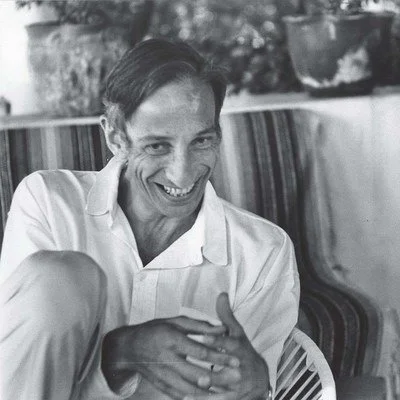
Illich at 100:
Local gatherings around the globe to mark the centenary of Ivan Illich’s birth, probably the most important social thinker you’ve never heard of. Whether you are just curious, or a longtime reader of Illich, you are warmly invited to join us in the convivial atmosphere of Goldfinch Bookshop and share your interest in Illich.
“Learned and leisurely hospitality is the only antidote to the stance of deadly cleverness that is acquired in the professional pursuit of objectively secured knowledge. I remain certain that the quest for truth cannot thrive outside the nourishment of mutual trust flowering into a commitment to friendship. Therefore I have tried to identify the climate that fosters and “conditioned” air that hinders the growth of friendship”. - The Cultivation of Conspiracy
So who was this Ivan Illich?
A man around whom myths seemed to gather, while labels won’t stick: here’s what Dougald Hine, who spread the rumour of Illich at 100, has to say about his life and work…
For much of the 1970’s, it's said that Illich could “draw more people than Bob Dylan to any university campus”. In books such as Deschooling Society, Disabling Professions, Medical Nemesis and Tools for Conviviality, he brought the shadow side of modern institutions into question. His early drafts appeared in the New York Review of Books and on the front page of Le Monde, he was courted by world leaders from Pierre Trudeau to Indira Gandhi and in dialogue with everyone from Foucault to Krishnamurti.
But he outlived the years of his fame and went on gathering circles of friends on multiple continents, working in multiple languages, in a deepening enquiry into the hidden assumptions on which industrial modernity is founded. He died peacefully during a nap at Barbara Duden’s house in Bremen on 2 December 2002.
More than a decade later, the philosopher Giorgio Agamben suggested that Illich was finally approaching his “hour of legibility.” In the year of his centenary, Illich continues to be a lively influence on thought and action in a multitude of contexts.
“Institutions create certainties, and taken seriously, certainties deaden the heart and shackle the imagination. It is always my hope that my statements, angry or passionate, artful or innocent, will also provoke a smile, and thus a new freedom - even though the freedom come at a cost.” - Celebration of Awareness
Where to start exploring Illich:
Dougald Hine suggests your best route into Illich’s thinking will depend on where you’re coming from. Apart from the four books mentioned above, here are five texts from different eras that could offer entry points into his work.
“I want to cultivate the capacity for second thoughts, by which I mean the stance and competency that makes it feasible to enquire into the obvious.” - “Ascesis”
1. To Hell with Good Intentions (1968)
“Come to look, come to climb our mountains, to enjoy our flowers.
Come to study. But do not come to help.”
A blistering address delivered to an organisation of North American students preparing for voluntary work in Latin America. Since the 1950’s Illich had been living and working first in Puerto Rica and then in Mexico.
2. Energy and Equity (1973)
“The widespread belief that clean and abundant energy is the panacea to social ills is due to a political fallacy, according to which equity and energy can be indefinitely correlated.”
The shortest of Illich’s books, Energy and Equity gives a sense of his critique of the counterproductively of the social systems of the industrial age. It demonstrates why he had such an influence on the environmental movement, but how far he was at odds with the logic of “sustainable growth”, and how his work laid the foundations for today’s conversations about degrowth.
3. Shadow work (1980)
“Both “work” and “jobs” are key words today. Neither had its present prominence three hundred years ago. Both are still untranslatable from European languages into many others.”
In the 1980s, Illich turned his attention to an historical enquiry into the hidden assumptions on which industrial modernity was founded. This lecture gives a flavour of what he discovered.
4. Silence is a Commons (1982)
“Silence, according to western and eastern tradition alike, is necessary for the emergence of persons. It is taken from us by machines that ape people.”
In this short talk, given in Tokyo at a forum on ‘The Computer-Managed Society’, Illich brought his historical perspective to the technological transformation of the human and more-than-human world.
5. The Cultivation of Conspiracy (1998)
“Even before my first Bremen semester could start, Barbara Duden got a house in the Ostertor Viertel, beyond the old moat, just down from the drug corner, the farmers market and the Turkish quarter.”
In his early 70s, Illich was awarded the peace prize of the city of Bremen and gave this beautiful speech looking back on the “thinkeries” he had created together with friends in different seasons of his life as an antidote to the “conditioned air” of academic institutions.
Where to Next?
A good way to find your bearings in Illich’s work is to start with Ivan Illich in Conversation, the first of two books which grew out of his friendship with the Canadian broadcaster David Cayley. This book will be available for you to buy at Goldfinch Bookshop.
“We have to engage in an asceticism that makes it possible to savour now-ness and here-ness — here is a place, here is that which is between us, as the Kingdom is … if we are to save what remains in us of a sense of meaning, of metaphor, of flesh, of touch, of gaze.” - Illich in Conversation: David Cayley